
Cold & Flu Hotspots: Identifying Hidden Cross-Contamination
 dbernd
October 15, 2026
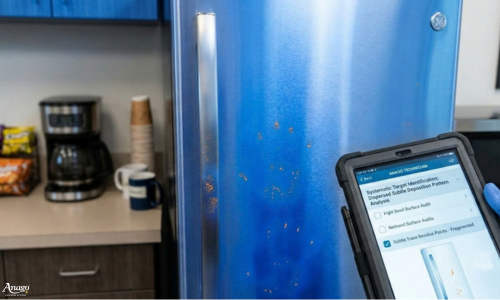
Conducting a systematic facility hotspot audit identifies overlooked touchpoints that serve as primary cross-contamination vectors during cold and flu season.
Areas like elevator buttons, break room appliance handles, shared keypads, and stairwell rails frequently escape routine sweeps, allowing pathogens to multiply rapidly.
Neutralizing these high-risk surfaces with targeted EPA-registered disinfectants breaks transmission chains across commercial properties.
Which Facility Hotspots Are Most Frequently Overlooked During Routine Cleaning?
High-touch fixtures like shared printer touchscreens, microwave handles, water cooler buttons, elevator controls, and door push-plates are the most frequently overlooked hotspots during routine visual sweeps. Because these surfaces do not collect obvious dirt, standard cleaning often skips them, leaving viral pathogens active for days.
| Facility Area | Overlooked Hotspot | Transmission Risk |
| Break rooms & Kitchens | Microwave keypads, fridge handles, coffee levers | Extremely High (Frequent multi-user contact) |
| Common Transit Zones | Elevator buttons, stair handrails, entry handles | High (Continual traffic flow) |
| Shared Workstations | Desk phones, printer touchscreens, mouse controls | High (Direct hand-to-face vectors) |
| Restrooms | Stall latches, towel dispensers, faucet levers | High (Biological cross-contamination) |
During cold and flu season, these unmitigated touchpoints act as viral relay stations. A single user with a cold deposits viral particles that are subsequently picked up by dozens of co-workers throughout the day.
Industry Correction: Most cleaning checklists focus heavily on floor care and trash removal while treating shared touchpoints as secondary. However, viral cross-contamination happens almost entirely on non-porous touch fixtures, making touchpoint audits far more important for infection control than general aesthetic cleaning.
How Do You Conduct an Effective Cold and Flu Surface Audit?
Conducting an effective surface audit involves mapping human traffic patterns, logging touchpoint frequencies, and utilizing objective testing tools like ATP fluorescence or surface swipes. This data pinpoints exact areas where biological loads accumulate, allowing technicians to focus chemistry where it delivers maximum impact.
Anago Cleaning Systems® conducts comprehensive facility audits to design custom sanitization schedules. By identifying hidden vectors, Facility Service Partners ensure chemical application targets real infection risks rather than waste effort on clean spaces.
- Spatial Mapping: Identify all high-frequency contact points along daily occupant pathways.
- Traffic Analysis: Assess peak usage times for common areas and break rooms.
- Targeted Protocol Design: Match EPA-registered List N chemistry and dwell times to specific surface materials.
What Is the Proper Protocol for Neutralizing High-Risk Touchpoint Vectors?
Neutralizing high-risk touchpoints requires applying EPA-registered List N chemistry using specialized microfiber or electrostatic tools while maintaining exact chemical dwell times. Allowing the disinfectant to remain wet for the full manufacturer-recommended contact time guarantees 99.9% neutralization of cold and flu viruses.
Projected 2026 environmental hygiene standards emphasize precision chemistry over indiscriminate spraying. Proper surface application prevents chemical pooling on sensitive electronics while ensuring complete pathogen destruction.
- Targeted Efficacy: Neutralizes viral envelopes on high-risk surfaces.
- Resource Efficiency: Focuses specialized products where human contact is highest.
- Operational Safety: Uses safe, non-corrosive formulations suitable for delicate office technology.
How Do You Present Hotspot Audit Findings to Leadership for Internal Buy-In?
Presenting audit findings to leadership requires using concrete data to show how overlooked surfaces contribute to employee illness. Visualizing pathogen hotspots makes the need for targeted sanitation undeniable.
- For Operations Directors: Use facility maps to demonstrate how unmitigated break room and transit touchpoints threaten overall operational uptime.
- For EH&S Leaders: Present audit findings as evidence of proactive risk management that supports OSHA health guidelines and CDC recommendations.
- For Property Managers: Position comprehensive touchpoint audits as a value-added service that protects building occupants and enhances property reputation.
Frequently Asked Questions About Hotspot Audits
What is a facility touchpoint hotspot audit?
How often should facility hotspots be audited during cold and flu season?
Can electrostatic sprayers disinfect delicate touchpoints like shared keypads and touchscreens?
Stop Hidden Pathogens in Their Tracks
Eliminate overlooked viral vectors before they disrupt your workforce. Connect with your local Anago franchisee for your comprehensive facility hotspot audit today.
By Darlene Bernd, Content Marketing Manager
